Hozan Jujutsu
Herne Hill · Swan Valley · Perth
First Steps — our beginners jujutsu course.
Two intakes Oct 1 and Oct 3
The real question
Not "does jujutsu work" — every martial art has an answer to that.
The real questions before committing four weeks to something new:
— Will this course be worth my time?
— Will I be treated like a person who can decide for themselves?
— Will I be made to look stupid in front of people who already know what they're doing?
— What actually happens in the first class?
Direct answers below.
What First Steps is
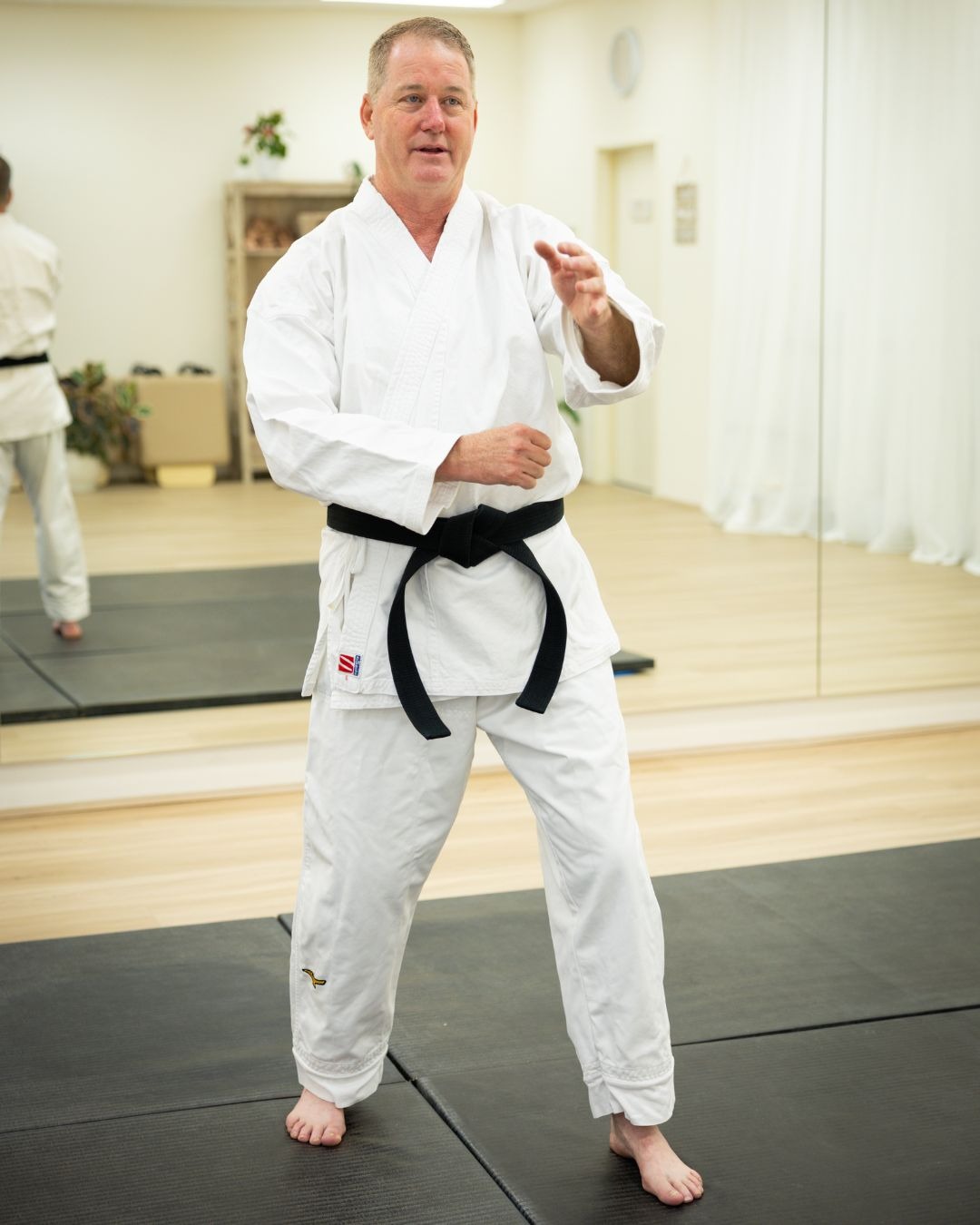
Japanese jujutsu is a traditional unarmed martial art of the Samurai. Built on movement, position, and the mechanics of unbalancing. It teaches you how to decide — how to read a situation, move first, and respond from a position of advantage rather than reaction. It isn't fast. It isn't flashy. It is real, and it works, it has done for centuries.
First Steps is the door in. Four weeks. One class a week. A small closed cohort of complete beginners, taught from the first principles of the art — how to stand, how to move, how to fall safely, and how to make a technique work when the person you're training with is genuinely trying to attack you. By the end of four weeks you'll have felt what jujutsu actually is, and you'll know whether you want to keep going.
The objective isn't mastery. Four weeks earns you the ground floor — enough real jujutsu to make an honest decision about what comes next.
What it isn't
Not BJJ. Not MMA. Not Muay Thai. Not Krav Maga. Not a cardio class. No sparring, no competition, no fight-gym culture.
Japanese jujutsu is a cooperative partner-based art from a formal Japanese traditional syllabus. You learn techniques with your partner, not against them. The training is technical, slow enough to be honest, and structured to teach you how situations work rather than which move to throw.
The art was built by samurai — refined on the battlefield over centuries, then carried forward as the unarmed and close-quarters system a warrior needed when weapons were lost, broken, or the wrong tool. Everything in the syllabus is there for a reason: strikes, throws, joint locks, weapons defence, ground work, responses to more than one attacker. Nothing in it was designed for a scoreboard.
That's the design brief the modern syllabus still follows. You don't need any of it for a sport contest. You do need it if the situation is real.
If what you're after is sport based BJJ, MMA, or Krav Maga, this isn't it — and that's fine. Perth has good gyms for all three.
Year 7+ welcome
Teens Year 7 and older are welcome in First Steps alongside adults. The cohort is small enough that a teen isn't lost in the room, and cooperative-partner training scales naturally to whoever you're working with in the moment.
Who it's for
If you want to:
— learn a physical skill that gets more interesting the longer you do it
— train in a small serious group without ego or hierarchy
— understand how self-defence actually works, not just memorise techniques
— be taken seriously, whether you're 15 or 55
If you don't want:
— sparring or competition
— fast belt promotions
— a fitness class dressed up as a martial art
— a class of thirty doing the same move in rows
Who's teaching?
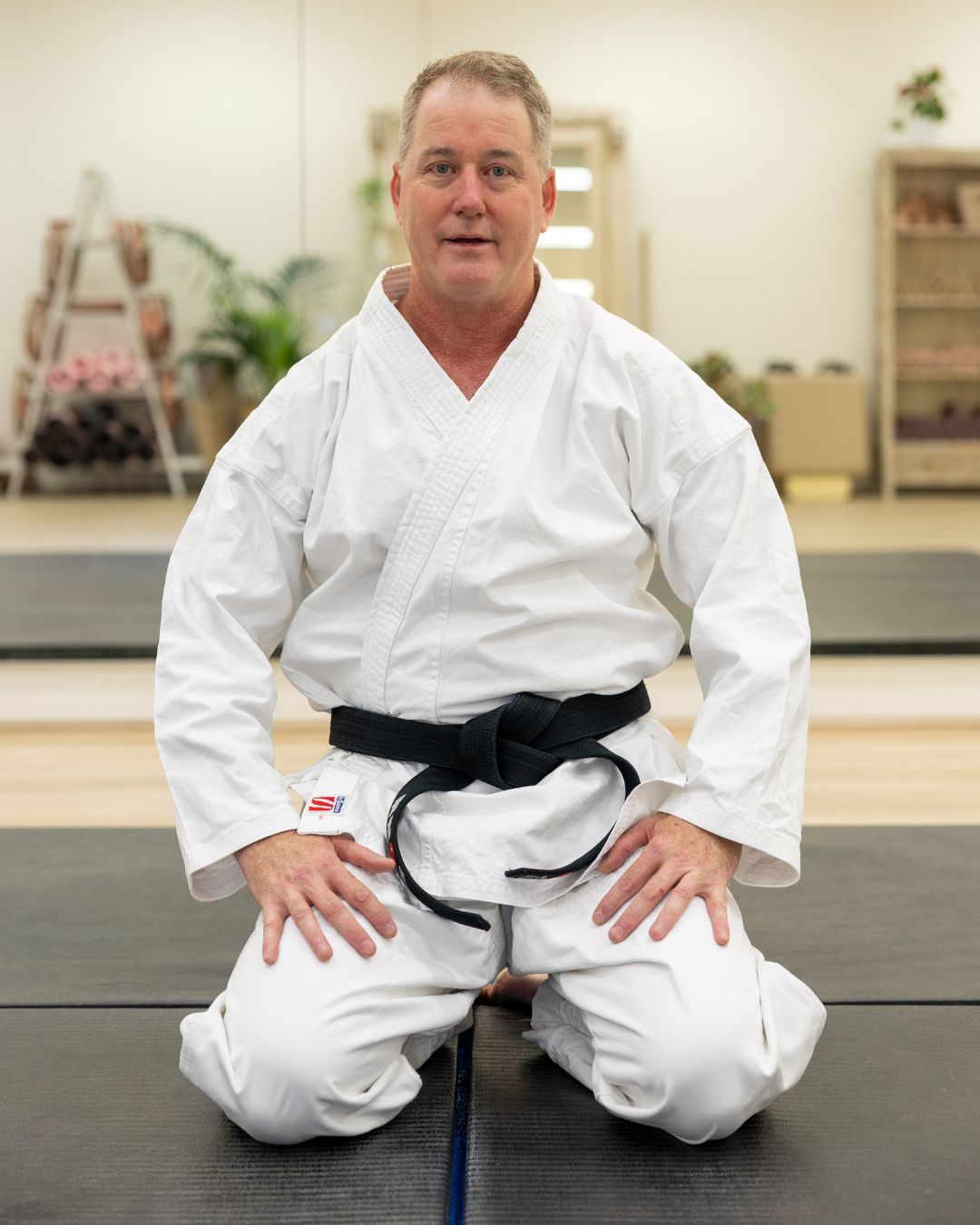
Jeremy Millar — Shodan in de Jong lineage Tsutsumi Hozan Ryu Jujutsu. Certificate IV in Training and Assessment (qualified adult educator). Master of Leadership. Former Australian Army Unarmed Combat Instructor.
Hozan operates under the Tsutsumi Hozan Ryu International (THRI) programme, following the formal THRI syllabus. Jeremy continues his own weekly training under Dan Newcombe Shihan (head of THRI) while running Hozan — this is a living practice, not a finished one.
You'll be taught by Jeremy every session.
Is there something you'd like to ask?
Message Jeremy directly:
Founding cohort
This is Hozan's first cohort. That means one thing worth being direct about: nobody in Week 1 is ahead of anyone else. No hierarchy to enter. No existing students who already know the room. Everyone starts on the same session.
You cannot be the person in the room who doesn't know what's going on. Nobody knows what's going on yet. That's the point.
That's a one-time thing. Every cohort after this one joins a dojo that already has students in it.
A course, not a trial
There's a difference between trying something and starting it.
A trial lets you sample — you see the room, meet the instructor, get a feel for what you're considering. Trials work for people who already know what they're looking for.
For someone new to jujutsu, a single trial class doesn't teach you much. It shows you jujutsu from the outside — a warm-up, a technique or two, an hour on the mat that could be almost anything. You leave with an impression, not a foundation.
First Steps is the alternative. Four weeks, structured from session one as the beginning of the art. You'll wear a gi from the first lesson. Each session earns the next. By the end you'll have trained two techniques, five attacks, three body movements, and the principles connecting them. You'll know what jujutsu is because you'll have done it — not because someone described it.
The gi is yours to keep. You'll wear it from session one, and leave session four with something on it that wasn't there when you arrived — the marks of real training.
Four lessons. One class a week. A small closed cohort.
Your participation in the course will be officially recognised. A certificate at the end of the four weeks — and, for those who continue to regular classes, a black tip on your white belt. It marks First Steps as the first formal step in the syllabus, not a standalone intro.
What happens after that is up to you. We hope you'll continue your journey.
The four weeks
Each week does one thing. Each builds on the last.
Week 1 — the shape. How to stand (kamae). How to move off the line when a punch comes (irimi, and entering with rotation — irimi senkai). How to fall safely to the side (yoko ukemi). Then your first technique — the wrist twist, kote gaeshi — built from the two things you've just learned. Two principles named the first night: get off the line, and lead the balance.
Week 2 — same principle, different technique. Revision, then something new: the same entry, a different hand position, a different lock. The side wrist lock — yoko kote kudaki. One principle expressed through two techniques. This is how jujutsu actually works — not a hundred moves memorised, but a small number of principles applied. Week 2 is also where pain compliance is introduced, with a training agreement made explicit before anything else. Your partner is not resisting you. You are not resisting them. You are both training the same thing on the same body at the same time.
Week 3 — same technique, different road. What happens when you're late? When the attack is to your face rather than your body? A new movement — nagashi, flowing — for when there isn't time to enter deliberately. A new first contact — the brushing block. And two new ways into the same technique from Week 1, each arriving at the same position by a different route. By the end of Week 3: four attacks, two entries, one position, one technique. The lesson underneath — techniques don't belong to attacks. They belong to positions.
Week 4 — everything, tested together. One more attack — the shoulder grab from behind — and a new idea: reverse unbalancing, where the attacker's own commitment is what takes them off balance. Then the reflex drill. You stand in kamae. You know an attack is coming. You don't know which one. Your job is patience — let the attacker show you what the attack is, move first, and let the technique find you from where you end up.
By Week 4 you've trained two techniques, five attacks, three body movements, and two unbalancing directions. That's not a small thing — and it works because each lesson earned the next.
Book first steps
For this first intake — October — two cohorts run in parallel so more people can start together:
— Thursday evenings, 6:30pm arrival for a 6:40–7:40pm class
— Saturday afternoons, 2:00–3:00pm
Same course, same instructor. $75 covers the whole course and your gi. Each cohort closes after Week 1 so the learning stays coherent for everyone in the room.
At the end of your four weeks, you decide whether to continue on Flex10 ($200 for ten classes, used across the ongoing class schedule). No contract, no rolling billing, no upsell.
Prefer to ask something first? Message us:
Experienced trial
If you've trained in jujutsu before or have a background in a related martial art, you probably don't need our First Steps beginner's course. You need time on the mat, the traditional trial class.
If you have trained in a de Jong or Yoseikan lineage school, your grade will be recognised here also.
Send us a message to discuss.
The dojo

HOSTED BY LUMEA PILATES STUDIO
Shop 1 / 660 Great Northern Highway Herne Hill. Perth. WA 6056
Co-located with Lumea Pilates Studio in the Swan Valley.
Free parking. Air conditioned. Purpose-set training space. If someone wants to watch a session, there's room for that.
HOZAN JUJUTSU
De Jong Lineage · Swan Valley, Perth
Unit 1 660 Great Northern Highway , Herne Hill, WA, Australia, 6056
@ Lumea Pilates Studio
© Copyright 2026.All rights reserved.